


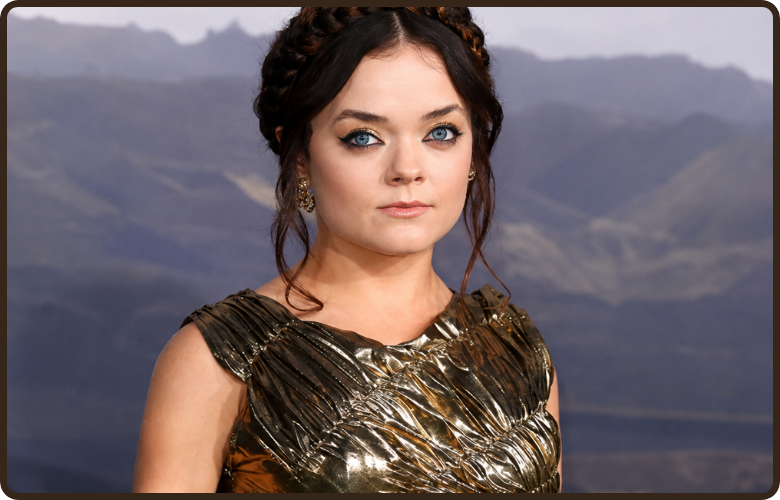
Francesca Mills is an English actress who has progressed through television, streaming services, and theatre shows of high calibre. She hails from Staffordshire and started off dancing but has since gained acting experience. On television, she has starred in such series as Harlots, Worzel Gummidge, and The Witcher: Blood Origin, while her theatre roles have seen her act at Shakespeare’s Globe and National Theatre. She has received much acclaim from critics for her work, especially when it comes to her theatre roles that have included classical theatre. More than just specific roles, her career has showcased a dedication to diversity and representation in the performing arts.
Instant Bio
| Profile Detail | Francesca Mills | Career Profile |
| Full Name | Francesca Mills | British Stage and Screen Career |
| Date of Birth | March 15, 1996 | Career began professionally in the 2010s |
| Age | 30 years old in 2026 | More than a decade of professional activity |
| Birthplace | Loggerheads, Staffordshire, England | United Kingdom |
| Nationality | British | British entertainment industry |
| Citizenship | British | United Kingdom |
| Profession | Actress | Theatre, television and streaming |
| Famous For | Harlots, Worzel Gummidge, The Witcher: Blood Origin | Screen and classical theatre performances |
| Parents | Not widely documented publicly | — |
| Siblings | Not widely documented publicly | — |
| Education | Trained in theatre and performance, including Urdang Academy | Professional performance training |
| Career Beginning | Professional acting work in the 2010s | Stage and television |
| Major Breakthrough | Harlots and subsequent theatre work | Growing recognition in British acting |
| Major Television Work | Harlots, Worzel Gummidge, The Witcher: Blood Origin | Period drama, comedy and fantasy |
| Major Film Work | Screen work primarily centered on television and streaming | Film credits are less prominent than theatre and TV |
| Production Company or Business Work | No major personal production company publicly documented | — |
| Major Awards | First prize, 2024 Ian Charleson Awards | Recognition for classical theatre |
| Major Achievements | Award-winning Shakespearean performance | Expanding opportunities for disabled performers |
| Spouse | Not publicly confirmed | — |
| Marital Status | Not publicly confirmed | — |
| Marriage Year | Not publicly documented | — |
| Previous Marriages | Not publicly documented | — |
| Children | Not publicly documented | — |
| Family Background | Raised in Staffordshire | Early performance interests |
| Career Highlight | Hermia in A Midsummer Night’s Dream | Ian Charleson Award-winning performance |
| Signature Work | A Midsummer Night’s Dream and Harlots | Stage and screen acting |
| Years Active | 2010s–present | Continuing |
| Current Career Focus | Theatre and screen acting | Classical and contemporary performance |
Who Is Francesca Mills?
Francesca Mills is a British actress who has developed a diverse career across television, streaming productions, and theatre. She became known to wider audiences through roles in Harlots, Worzel Gummidge, and The Witcher: Blood Origin. Her performances have allowed her to explore different genres while building a strong reputation as a versatile performer.
Her early interest in performance was connected to dance, which helped her develop confidence, movement skills, and stage awareness. She later pursued professional acting and gained experience through both live theatre and screen productions. This combination of training and practical experience helped shape her approach to character development and performance.
Theatre has remained an especially important part of her career, with appearances at respected institutions such as Shakespeare’s Globe and the National Theatre. Her performance as Hermia in A Midsummer Night’s Dream earned first prize at the 2024 Ian Charleson Awards. This recognition strengthened her position as a notable performer in contemporary British classical theatre.
Francesca Mills: Career and Acting Areas
Francesca Mills has worked across several areas of entertainment, including television drama, fantasy, comedy, streaming productions, and classical theatre. Her television credits demonstrate her ability to move between different tones and audiences, while her stage performances highlight her skills with demanding theatrical material. This broad experience has become an important feature of her professional identity.
Her screen career includes Harlots, where she played Cherry Dorrington, as well as Worzel Gummidge and The Witcher: Blood Origin. These productions gave her opportunities to work within period drama, family fantasy, and international streaming entertainment. Each project added a different dimension to her growing acting résumé.
On stage, she has taken on roles in Shakespearean and contemporary productions, allowing her to demonstrate a wider dramatic range. Her work at major British theatre institutions has contributed significantly to her recognition among theatre audiences. By continuing to explore different acting areas, she has built a career based on versatility rather than being limited to one particular type of role.
Early Life and Path Into Acting
Growing up in Staffordshire, Mills developed an interest in performance at an early age. Dance played an important role in her formative years, giving her experience with movement, rhythm, discipline, and stage presentation. She later pursued formal training that helped her transition from dance toward acting. This combination of physical performance and dramatic training became a useful foundation for her later work.
Her decision to concentrate on acting opened opportunities across different forms of performance. Rather than remaining associated with one entertainment format, she gradually built experience in theatre and television. Early professional opportunities allowed her to develop confidence in front of audiences while learning how to approach very different characters. That foundation became increasingly valuable as she moved toward more demanding dramatic productions.
A significant feature of her development has been the progression from supporting appearances toward more substantial roles. Her work demonstrates that a performer can build a varied career by combining television visibility with stage experience. This approach has allowed her to work with established theatre institutions while also reaching audiences through internationally available streaming productions. Consequently, her career has expanded beyond a single defining role.
Her background also provides context for the importance of movement and physicality in her performances. Theatre requires actors to communicate character through voice, expression, timing, and presence, while television demands a more detailed relationship with the camera. Working across both environments has helped her demonstrate adaptability. That versatility remains one of the strongest characteristics of her professional profile.
Television Roles and Screen Career
One of her notable television appearances came in the period drama Harlots. The series placed her within a large ensemble cast and gave her an opportunity to work in a dramatic historical setting. Her character, Cherry Dorrington, contributed to the show’s wider exploration of relationships, survival, ambition, and social inequality. The role helped increase her visibility among television audiences.
She later appeared as Earthy Mangold in Worzel Gummidge, demonstrating a noticeably different side of her screen work. The production combines fantasy, comedy, family storytelling, and traditional British television sensibilities. Moving from a mature period drama to family-oriented fantasy showed that she could adapt to different tones and audiences. This range helped prevent her career from becoming tied to one particular genre.
Her international screen profile expanded further through The Witcher: Blood Origin. In the fantasy miniseries, she portrayed Meldof, a character who became part of the show’s ensemble of adventurers. The production connected her work with a major global streaming franchise and introduced her performance to viewers beyond Britain. It represented an important step in the expansion of her screen career.
Her television résumé also includes appearances in productions such as Silent Witness, Boat Story, Sneakerhead, and other British projects. These credits illustrate a continuing willingness to work across crime drama, comedy, contemporary storytelling, and fantasy. Instead of following one predictable route, she has accumulated varied experiences across the screen industry. That breadth complements the classical theatre work that has become another major part of her career.
Theatre Career and Major Achievements
Theatre has played a particularly important role in Mills’ professional development. She has worked with respected British institutions including Shakespeare’s Globe and the National Theatre. Such venues provide actors with opportunities to perform demanding classical and contemporary material before live audiences. Her stage credits therefore form a significant part of her overall artistic reputation.
Her Shakespearean work has been especially important. Playing Hermia in A Midsummer Night’s Dream gave her the opportunity to take on one of Shakespeare’s best-known comic roles. The production allowed her to combine timing, physicality, character development, and classical language in a demanding live environment. Her performance ultimately received considerable professional recognition.
In 2024, she won first prize at the Ian Charleson Awards for her performance as Hermia. The awards recognize outstanding performances by young actors in classical theatre, making the achievement particularly relevant to her stage career. The recognition demonstrated that her work was being judged on acting ability and classical performance rather than simply visibility. It also marked an important milestone in her professional development.
Her theatre credits extend beyond Shakespeare to productions including The Government Inspector, The Two Noble Kinsmen, The Duchess of Malfi, All of Us, and other stage projects. This mixture of classical and contemporary material illustrates her ability to move between different dramatic styles. Her continued theatre work has consequently become central to understanding her career. It also demonstrates the value she places on challenging and varied performance opportunities.
Representation, Career Development, and Future Work
Mills’ career has broader significance because she has spoken publicly about the need for performers with dwarfism to receive more varied opportunities. Rather than being restricted to narrowly defined character types, she has pursued roles that allow her to demonstrate emotional range and theatrical skill. Her classical performances are particularly meaningful within that context. They show audiences and casting professionals that physical difference does not determine the dramatic range an actor can offer.
Her career also illustrates how representation can develop through both mainstream entertainment and established theatre. Television brings performers to large audiences, while theatre provides opportunities for detailed character work and sustained live performance. By working in both spaces, she has built a professional identity that is broader than any single television credit. This combination has helped make her career distinctive within contemporary British acting.
Looking ahead, theatre remains an important part of her professional trajectory. Her work connected with the National Theatre and other major institutions indicates continued interest in substantial stage productions. At the same time, her previous streaming and television credits leave room for further screen opportunities. Her future career can therefore reasonably be viewed as a balance between stage and screen rather than a move exclusively toward one medium.
Key points about her professional journey include:
- Early training in dance and theatre supported her transition into acting.
- Television recognition grew through Harlots and Worzel Gummidge.
- The Witcher: Blood Origin expanded her international screen exposure.
- Shakespearean theatre became an important part of her professional identity.
- Her Hermia performance earned first prize at the 2024 Ian Charleson Awards.
- Her career contributes to wider conversations about representation in British theatre and television.
- She continues to pursue varied opportunities across stage and screen.
Frequently Asked Questions
When was Francesca Mills born?
Francesca Mills was born on March 15, 1996, in Loggerheads, Staffordshire, England. She has developed her career primarily within British theatre and television.
What is Francesca Mills known for?
She is recognized for performances in Harlots, Worzel Gummidge, and The Witcher: Blood Origin. Her theatre career is also an important part of her professional reputation.
Did Francesca Mills win theatre awards?
Yes, she won first prize at the 2024 Ian Charleson Awards for playing Hermia in A Midsummer Night’s Dream. The award recognizes notable classical theatre performances.
Which Witcher role did she play?
She portrayed Meldof in The Witcher: Blood Origin. The Netflix fantasy series introduced her work to a broader international streaming audience.
Does Francesca Mills work in theatre?
Yes, theatre remains a major part of her career. She has performed with institutions including Shakespeare’s Globe and the National Theatre.
Conclusion
Francesca Mills has carved out a distinct path through the medium of television, streaming, and acclaimed theatre performances in the United Kingdom. Her evolution from performing arts training to playing Shakespeare is a reflection of resilience and adaptability. Performances in television series including Harlots, Worzel Gummidge, and The Witcher: Blood Origin have gained her popularity, whereas her contributions to theatre have earned her critical acclaim. Her success at winning the Ian Charleson Award is particularly significant in terms of classical performance. Apart from all this, it should be noted that her career has added to the visibility of performers with dwarfism.
