


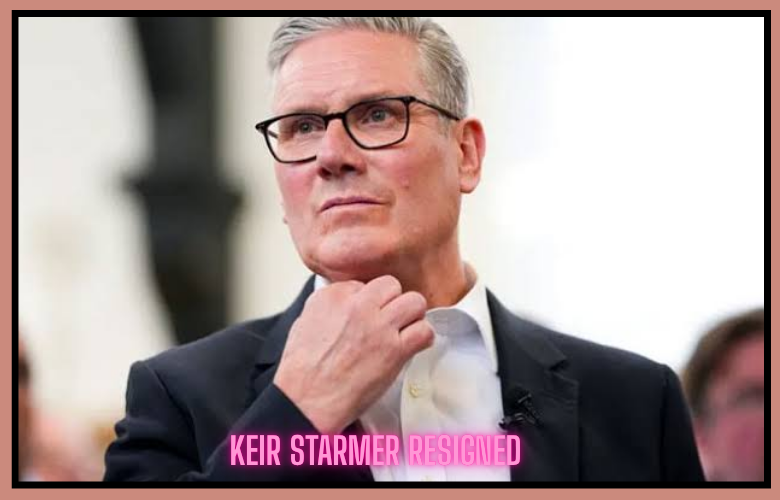
The leaving of Keir Starmer from the Downing Street was a huge milestone in the political history of Great Britain because it ended the premiership of Keir Starmer who served as the Prime Minister from July 20, 2024 until July 20, 2026. He joined the office after winning the general election by the Labour Party in 2024. After Keir Starmer, Andy Burnham served as the Prime Minister and the leader of the Labour Party. This article highlights the comparison between the two politicians and their political backgrounds and explains the power transition.
Instant Bio
| Profile Detail | Keir Starmer | Andy Burnham |
| Full Name | Sir Keir Rodney Starmer | Andrew Murray Burnham |
| Date of Birth | 2 September 1962 | 7 January 1970 |
| Age | 63 as of August 2026 | 56 as of August 2026 |
| Birthplace | London, England | Liverpool, England |
| Nationality | British | British |
| Citizenship | British | British |
| Profession | Politician and former barrister | Politician |
| Famous For | Former UK Prime Minister, Labour leader and senior barrister | UK Prime Minister, Labour leader and former Mayor of Greater Manchester |
| Parents | Rodney Starmer and Josephine Starmer | Kenneth Burnham and Eileen Burnham |
| Siblings | Three siblings | Two siblings |
| Education | Reigate Grammar School; University of Leeds; Oxford University | St Augustine’s Catholic High School; Fitzwilliam College, Cambridge |
| Career Beginning | Barrister from 1987 | Parliamentary researcher before entering the Commons |
| Major Breakthrough | Director of Public Prosecutions, 2008 | Election as MP for Leigh in 2001 |
| Major Television Work | Political interviews, parliamentary broadcasts and televised leadership debates | Political interviews, parliamentary broadcasts and televised mayoral debates |
| Major Film Work | No major film career | No major film career |
| Production Company or Major Business Work | No major production company; legal career was his principal profession | No major production company; political and public-sector career has been his main work |
| Major Awards | Knighted in 2014 for services to criminal justice | Recognised through major public-service and political roles |
| Major Achievements | Led Labour to its 2024 general election victory and became Prime Minister | Led Greater Manchester as mayor and became Prime Minister in 2026 |
| Spouse | Victoria Starmer | Marie-France Burnham |
| Marital Status | Married | Married |
| Marriage Year | 2007 | 2000 |
| Previous Marriages | None publicly documented | None publicly documented |
| Children | Two | Three |
| Family Background | Raised in a working-class family in Surrey | Raised in a working-class Catholic family in Merseyside |
| Career Highlight | Prime Minister from 5 July 2024 to 20 July 2026 | Prime Minister from 20 July 2026; previously Mayor of Greater Manchester |
Keir Starmer’s Political Journey and Resignation
The resignation became formal on 20 July 2026, when Starmer delivered his final speech as Prime Minister outside Downing Street. In that address, he stated that he was offering his resignation and closing his time as Prime Minister. This was not merely speculation about a possible leadership change; the official government record confirms that his premiership ended on that date. Parliament also records his period as Prime Minister as running from 5 July 2024 until 20 July 2026.
For readers asking has keir starmer resigned, the official answer is yes. The important distinction is between his role as Labour leader and his role as Prime Minister, because those positions ended at slightly different points in July 2026. Starmer remains a Member of Parliament for Holborn and St Pancras, meaning his resignation from Downing Street did not mean that he immediately left Parliament.
Andy Burnham’s Rise to Downing Street
Andy Burnham has a long political career that predates his arrival at Downing Street. He was first elected to Parliament in 2001 and later held several government positions, including Chief Secretary to the Treasury, Secretary of State for Culture, Media and Sport, and Secretary of State for Health. His experience also includes senior opposition roles in health, education and home affairs. This gave him substantial Westminster experience before he became a nationally prominent mayor.
Burnham became Mayor of Greater Manchester in May 2017 and was re-elected in 2021 and 2024. During his time as mayor, he became closely associated with regional devolution, transport reform and Greater Manchester’s efforts to gain greater control over local decision-making. His political identity consequently became strongly connected with regional government rather than central Westminster. That experience became an important part of his public profile before his return to Parliament in 2026.
In June 2026, Burnham returned to Parliament through the Makerfield by-election. The official result shows that he won with 24,927 votes, representing 54.8% of the vote, with a majority of 9,231. He was subsequently elected Labour leader in July and became Prime Minister on 20 July 2026. His transition from regional mayor to national leader therefore happened within a remarkably short period.
The change also created a clear contrast between the two leaders. Starmer reached Downing Street after a career in law and opposition leadership, whereas Burnham arrived after decades in Parliament and nearly a decade leading Greater Manchester. Official government information now identifies Burnham as the current Prime Minister, while Starmer is listed as a former holder of the office.
What Changed After Starmer Left Office
The transfer of power was completed on 20 July 2026. Burnham went to Buckingham Palace, accepted the King’s invitation to form a government and then delivered his first speech as Prime Minister outside Downing Street. The official transcript records that he became the new head of government that afternoon. This established a direct constitutional transition from Starmer’s premiership to Burnham’s government.
Burnham’s early government agenda has placed emphasis on practical economic measures, regional development and closer cooperation with devolved governments. His first days in office included calls with the First Ministers of Scotland, Wales and Northern Ireland. Government announcements also highlighted measures involving energy bills, bus fares, business rates and greater regional involvement in economic decision-making. These priorities indicate a strong emphasis on practical delivery and decentralisation.
The political transition is also significant because Labour remains the governing party. Rather than a general election immediately replacing the government, the leadership change altered who leads the government from within the existing political framework. Burnham had already returned to Parliament and secured the Labour leadership before taking office as Prime Minister. Parliament and GOV.UK both now record him as the current Prime Minister and Labour leader.
For readers following the latest UK political developments, several facts are especially important:
- Keir Starmer served as Prime Minister from 5 July 2024 to 20 July 2026.
- Andy Burnham became Prime Minister on 20 July 2026.
- Burnham was elected Labour leader in July 2026.
- Starmer remains an MP for Holborn and St Pancras.
- Burnham represents Makerfield in the House of Commons.
- Burnham previously served as Mayor of Greater Manchester.
- The leadership change occurred without ending Labour’s position as the governing party.
(FAQs)
When did Starmer leave Downing Street?
Keir Starmer left the office of Prime Minister on 20 July 2026. His final speech outside Downing Street formally marked the end of his premiership.
Who replaced Starmer as Prime Minister?
Andy Burnham became Prime Minister on 20 July 2026. GOV.UK currently lists him as the holder of the Prime Ministerial office.
Is Starmer still an MP?
Yes, Sir Keir Starmer remains the Labour MP for Holborn and St Pancras. His parliamentary record continues after his departure from Downing Street.
Has keir starmer resigned from politics?
No. His resignation ended his premiership and Labour leadership, but he remains an elected Member of Parliament. His parliamentary career therefore continues after Downing Street.
When did Burnham become Prime Minister?
Andy Burnham became Prime Minister on 20 July 2026 after accepting the King’s invitation to form a government. He then delivered his first Downing Street speech.
Conclusion
Keir Starmer’s exit from Downing Street on 20 July 2026 marked the end of a premiership that commenced after Labour Party victory at the polls in 2024. The new incumbent, Andy Burnham, came into office after years of parliamentary and mayoral experience since he was already the mayor of Greater Manchester before joining the premiership. This is a very crucial time for the Labour Party and the country’s politics since it marks a time when the ruling party changes its leadership yet still remains in power.
